Paestum or Pompeii? Paestum is a Greek city founded around 600 BC, with three Doric temples among the best preserved in the world and few crowds. Pompeii is a Roman town buried by Vesuvius in AD 79, vast and very busy. If you can, see both: they are about an hour and a quarter apart by car.
It is a question our guests often ask when planning a few days in Campania. The honest answer is that there is no winner, only the right site for the way you travel. This guide compares the two archaeological parks in practical terms, with up-to-date hours and tickets, and shows you how to combine them.
What is the difference between Paestum and Pompeii?
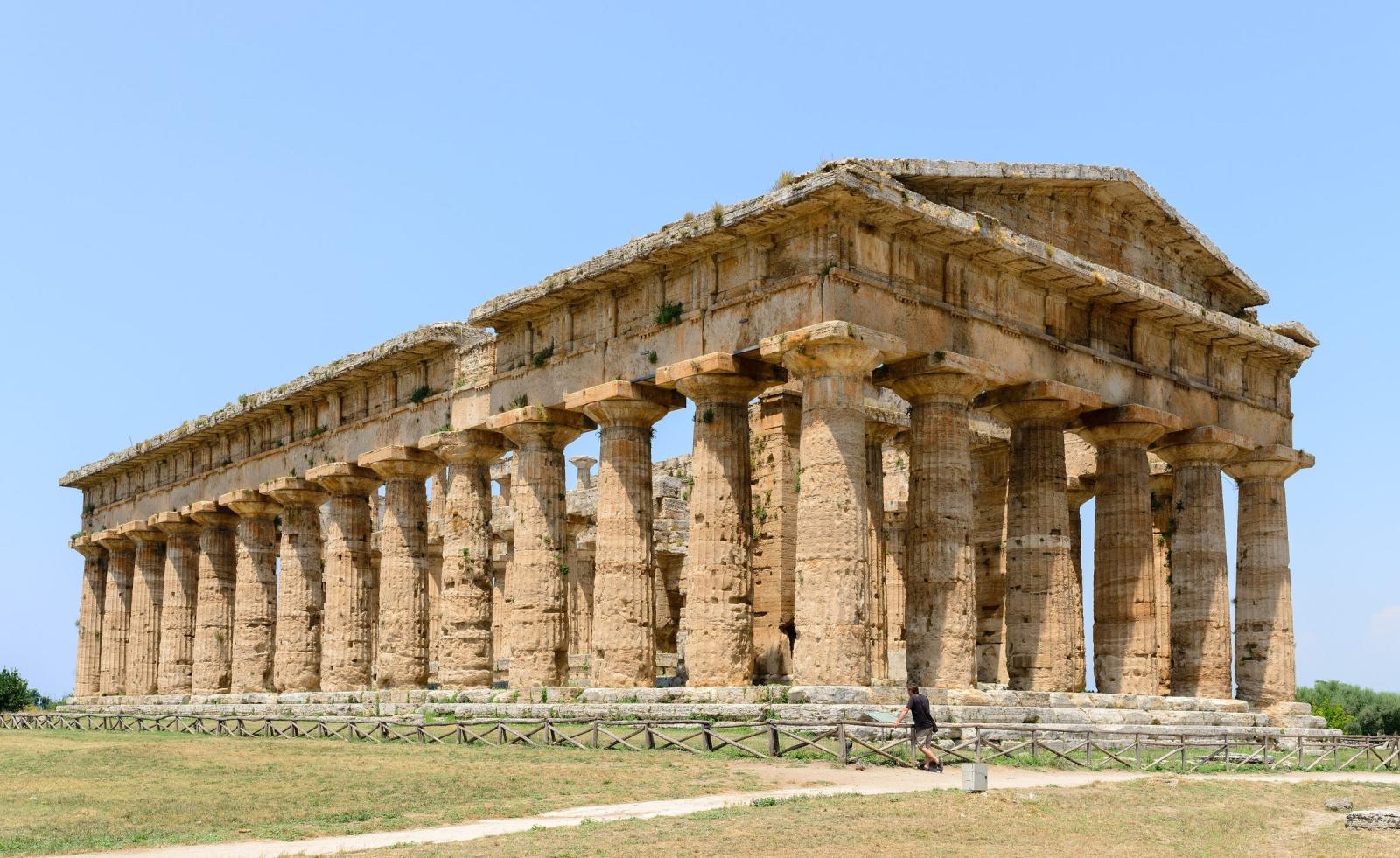
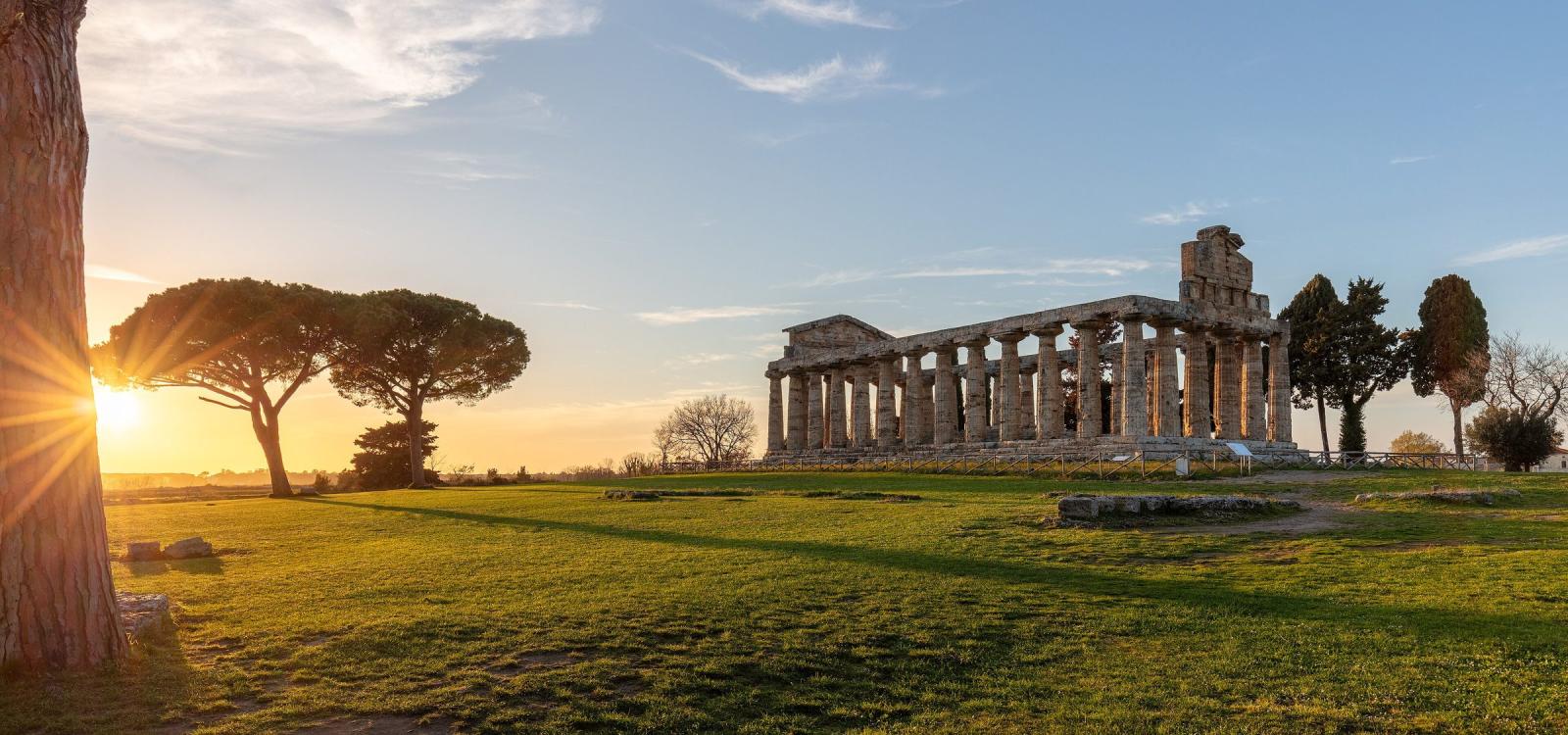
The main difference is the period, and therefore what you will see. Paestum began as Poseidonia, a Greek colony founded around 600 BC by settlers from Sybaris; it became a Roman colony in 273 BC. Its heart is a group of temples from the 6th and 5th centuries BC: the Temple of Hera (the "Basilica", c. 550 BC), the Temple of Athena (c. 500 BC) and the Temple of Neptune (c. 460-450 BC). Next to the park, the National Archaeological Museum holds the Tomb of the Diver (480-470 BC).
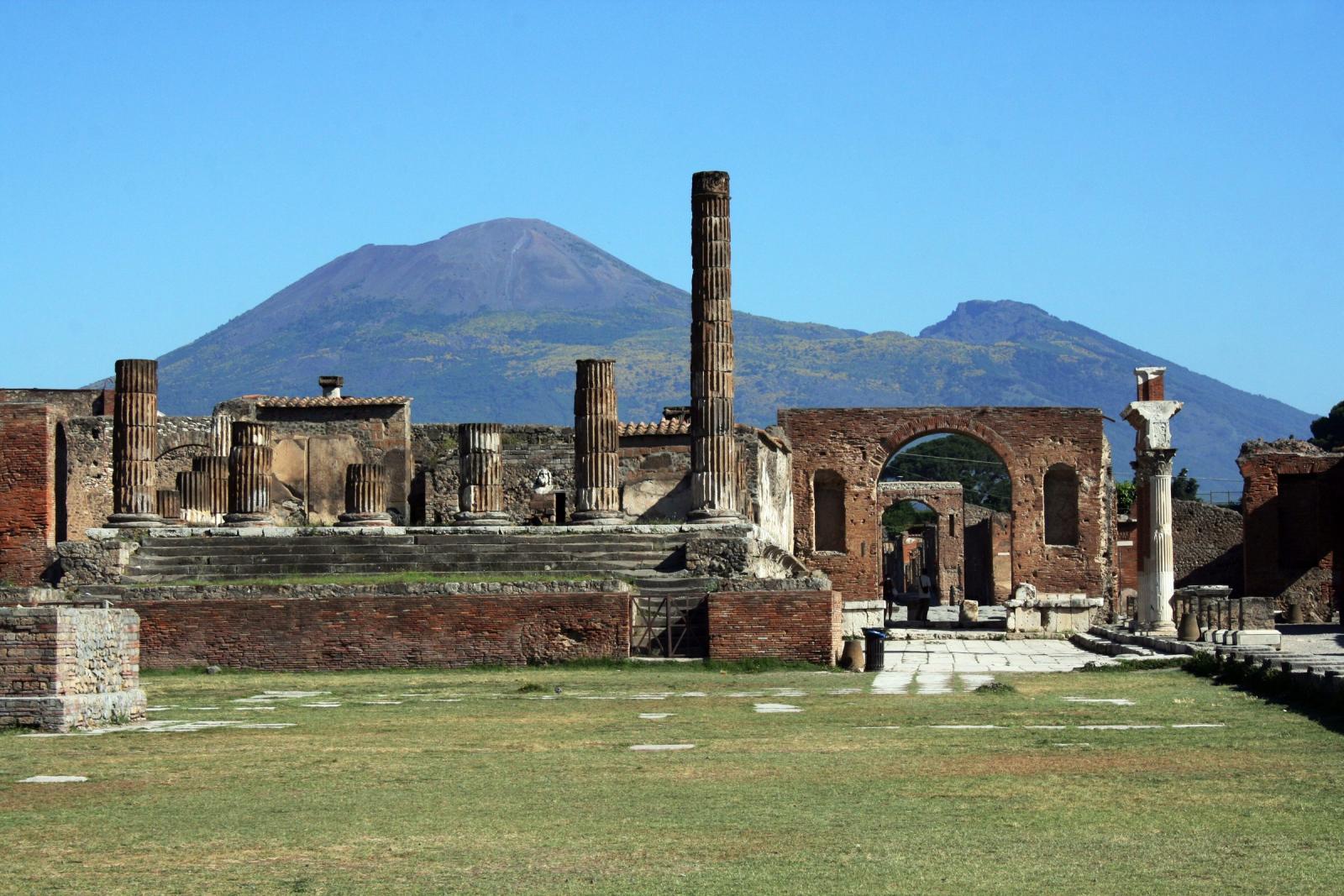
Pompeii, by contrast, is a Roman town frozen in an instant: the eruption of Vesuvius in AD 79 buried its streets, shops, frescoed houses, baths and theatres. At Pompeii you walk through the everyday life of two thousand years ago; at Paestum you stand before Greek sacred architecture more than five centuries older, set in open countryside.
Both are UNESCO World Heritage Sites: Paestum since 1998, together with Velia, the Certosa di Padula and the Cilento National Park (UNESCO listing); Pompeii since 1997, with Herculaneum and Torre Annunziata (UNESCO listing).
Paestum and Pompeii compared
| Aspect | Paestum | Pompeii |
|---|---|---|
| Period | Greek city (from c. 600 BC), later Lucanian and Roman | Roman town buried in AD 79 |
| What you see | Three great Doric temples, walls, forum, museum with the Tomb of the Diver | A whole town: streets, frescoed houses, baths, theatres, amphitheatre |
| Time needed | 3-4 hours including the museum | At least half a day, ideally 5-6 hours |
| Crowds | Moderate, often peaceful | Very high: over 4 million visits a year across the park's sites |
| Ticket | €15 (€10 December-February), valid 3 days, includes museum and Velia | From 1 January 2027 a single €26 ticket, valid 30 days for all the park's sites |
| Booking | Not essential | Named tickets, cap of 20,000 entries a day |
| From the B&B | About 10 minutes by car | About 1h15-1h30 by car |
Why is Pompeii still unmissable?
Let us be frank: for many travellers Pompeii is a must, and rightly so. Nowhere else brings the life of a Roman town back with such precision: shop signs, bakeries, houses with inner gardens, frescoes, paving stones grooved by cart wheels. It asks for time and stamina, because the visitable area is very large, but it repays the effort.
The flip side is the crowds. The Pompeii Archaeological Park now welcomes more than four million visitors a year and, since November 2024, has introduced named tickets and a limit of 20,000 entries a day; from mid-March to mid-October entries are also split into time slots. It pays to buy online in advance, from the reseller indicated by the park, and to arrive for the 9:00 opening.
What does Paestum offer that Pompeii does not?
Paestum offers two rare things: monumental Greek architecture and space. Its three Doric temples are among the best preserved in the Greek world, and the Temple of Neptune was built shortly before the Parthenon in Athens. You see them up close, in an open park where even in the busiest months it is easy to find a quiet corner, especially early in the morning or late in the afternoon.
There is also a practical advantage: with the same ticket, valid for three days, you can visit the park, the museum and Velia, the city of Parmenides. For a full guide to the temples and the museum, read our guide to the Temples of Paestum.
Which should you choose? It depends on how you travel
- You have a single day and are based in Naples or Sorrento: Pompeii, which is easy to reach by train.
- You love Greek architecture and quiet places: Paestum, and Velia too if you have time.
- You are travelling with young children or in summer: Paestum is more compact and means fewer hours in the sun; at Pompeii, plan breaks and plenty of water.
- You are staying in Cilento: Paestum is minutes away, Pompeii makes a day trip.
- You have three days or more: both, without rushing.
Can you see both? A three-day plan
Yes, and it is what we recommend. A realistic example:
- Day 1, Paestum: temples in the morning, the museum in the middle of the day, and a stop at a dairy for buffalo mozzarella.
- Day 2, Pompeii: leave early to be there at opening time, visit until early afternoon and head back before the evening traffic.
- Day 3, Velia: with the same Paestum ticket, still valid, perhaps with a swim on the Cilento coast.
You will find more combinations, from one to three days, in Paestum in 1, 2 or 3 days. If you would like to plan your trip around this programme, here are our rooms in the Capaccio countryside, ten minutes from the temples.
| Paestum: ticket | €15 (March-November), €10 (December-February); valid 3 days for the archaeological area, museum and Velia |
|---|---|
| Paestum: hours | Daily 8:30-19:30, last entry 18:30; from late September to late March the Porta Cerere entrance closes earlier (in the 2026-27 calendar at 16:00 between 14 November and 1 January) |
| Pompeii: ticket | From 1 January 2027 a single €26 ticket for all sites of the Pompeii Archaeological Park, valid 30 days (one entry per site); Oplontis, the Stabiae Archaeological Museum and Boscoreale also €8 each; MyPompeii Card annual pass €45. Until 31 December 2026 the tickets were Pompei Express (€20) and Pompei+ (€25) |
| Pompeii: hours | 15 October-15 March 9:00-17:00 (last entry 15:30); 16 March-14 October 9:00-19:00 (last entry 17:30); closed 25 December and 1 January (check the official website) |
| Pompeii: access | Named ticket with ID; maximum 20,000 entries a day, with time slots from mid-March to mid-October |
| Free entry | First Sunday of the month at both sites; at Paestum also 25 April, 2 June and 4 November (2026 calendar), and always for under-18s and 18- to 24-year-olds |
Sources: Paestum and Velia Archaeological Parks, Pompeii Archaeological Park, hours and fares and new 2027 fares. Hours and prices may change: please check before your visit.
How do you get from Paestum to Pompeii?
By car the journey is about 75-80 km: head towards Salerno and continue on the Naples-Salerno motorway to the Pompei exit. Allow about an hour and a quarter, up to an hour and a half in traffic. There are car parks around the excavations.
By train you will need to change. From Salerno, Trenitalia regional trains stop at Pompei station, in the modern town, about twenty minutes' walk from the ruins. The stop closest to the entrance is Pompei Scavi-Villa dei Misteri, on the Circumvesuviana Naples-Sorrento line. To reach Paestum and get around the area, all the options are in our guide How to get to Paestum.
If you visit Pompeii in summer, buy your ticket online for the morning slot and pack water and a hat: shade is scarce and distances are long. Paestum, on the other hand, is at its best in the low light of late afternoon, when the travertine of the temples turns the colour of honey.
What other day trips can you take from Paestum?
The Amalfi Coast
From Salerno, the SS163 Amalfitana road runs to Vietri sul Mare, Maiori, Amalfi and Positano. It is one of the most spectacular coastal roads in Italy, but also narrow and busy: from the B&B allow at least an hour and three quarters to Amalfi, more in summer, when at certain times Anas enforces odd-even number plate restrictions. Alternatively, from spring to autumn ferries leave Salerno harbour for Amalfi (about 35 minutes) and Positano (about 70 minutes); check times and dates with the operators, as the service is seasonal and suspended in rough seas.
Certosa di Padula
About an hour and a quarter away, the Certosa di San Lorenzo in Padula is one of the largest monastic complexes in Europe and part of the same UNESCO site as Paestum. We cover it in our guide to Cilento National Park; current hours are on the Ministry of Culture website.
Velia
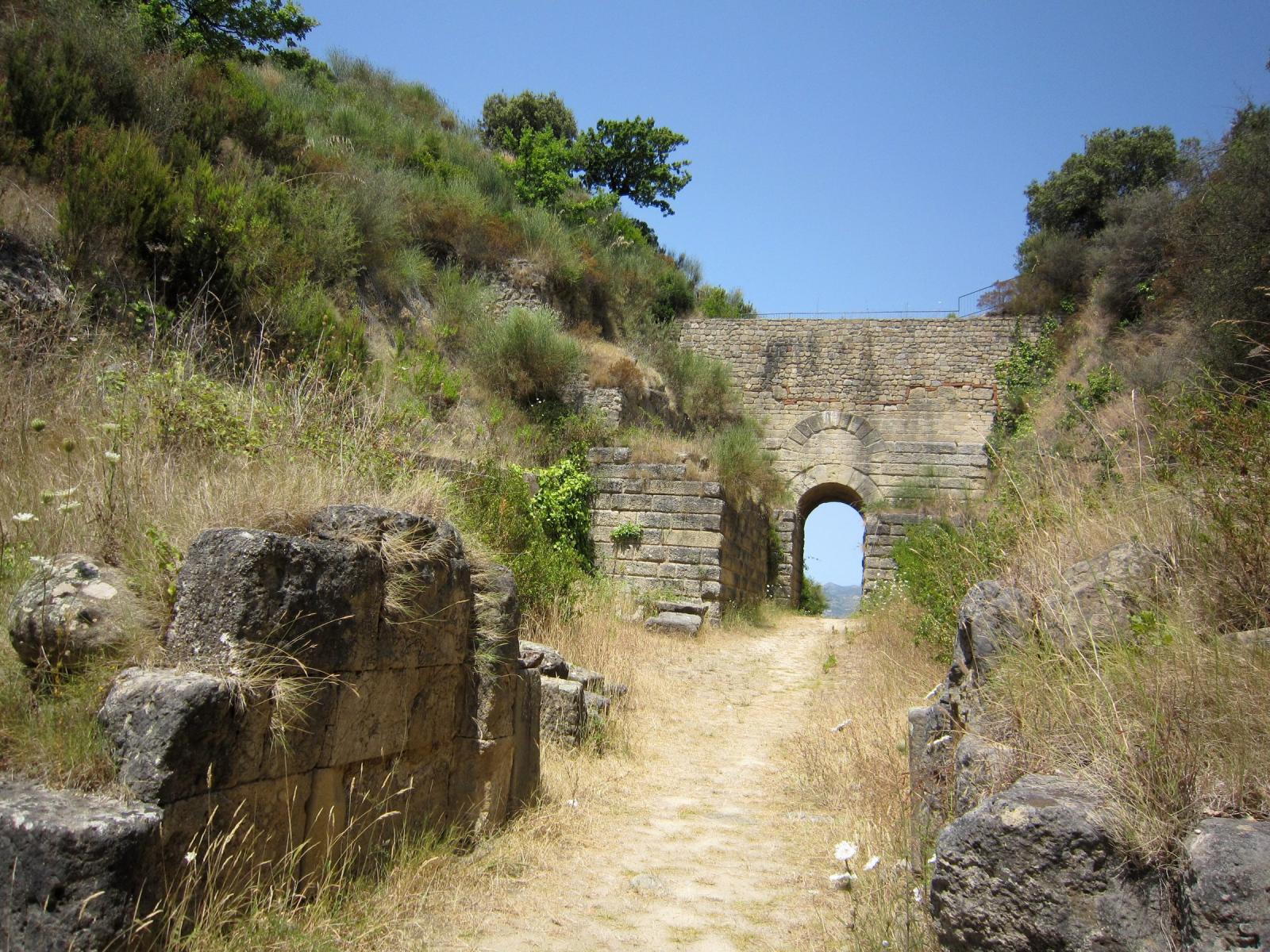
About an hour to the south, Velia completes a visit to Paestum on the same ticket: a smaller, quieter site on a hill overlooking the sea, home to the Porta Rosa.
Frequently asked questions
Is it better to visit Paestum or Pompeii?
It depends on what you are looking for. Pompeii shows a complete Roman town buried in AD 79 and is very crowded; Paestum offers three Greek temples from the 6th-5th centuries BC in a peaceful park. If you have two or three days, see both.
How far is Pompeii from Paestum?
About 75-80 km. By car it takes an hour and a quarter, up to an hour and a half in traffic, via Salerno and the Naples-Salerno motorway. By train you need at least one change.
How much are tickets for Paestum and Pompeii?
At Paestum the ticket costs €15 from March to November and €10 from December to February; it is valid for three days and includes the museum and Velia. At Pompeii, from 1 January 2027, a single €26 ticket is valid for 30 days at all the park's sites (until 31 December 2026 the tickets were Pompei Express at €20 and Pompei+ at €25). Entry to both parks is free on the first Sunday of the month.
Can you visit Paestum and Pompeii on the same day?
It is possible but tiring: around three hours of driving there and back, plus five or six hours at Pompeii. It is better to give each site its own day and use the three-day Paestum ticket for Velia as well.