Yes: between November and March Paestum is calmer and cheaper to visit. From December to February the full ticket costs €10 instead of €15, is valid for three days and includes the museum and Velia; the temples are almost empty and the weather is often mild. The trade-off is short days and several seasonal services on pause.
This guide is for anyone planning an autumn or winter trip, a day visit or their next stay. One honest note before we start: Il Giardino dei Pini is closed during the winter months and will reopen in summer 2027.
Why visit Paestum in autumn and winter?
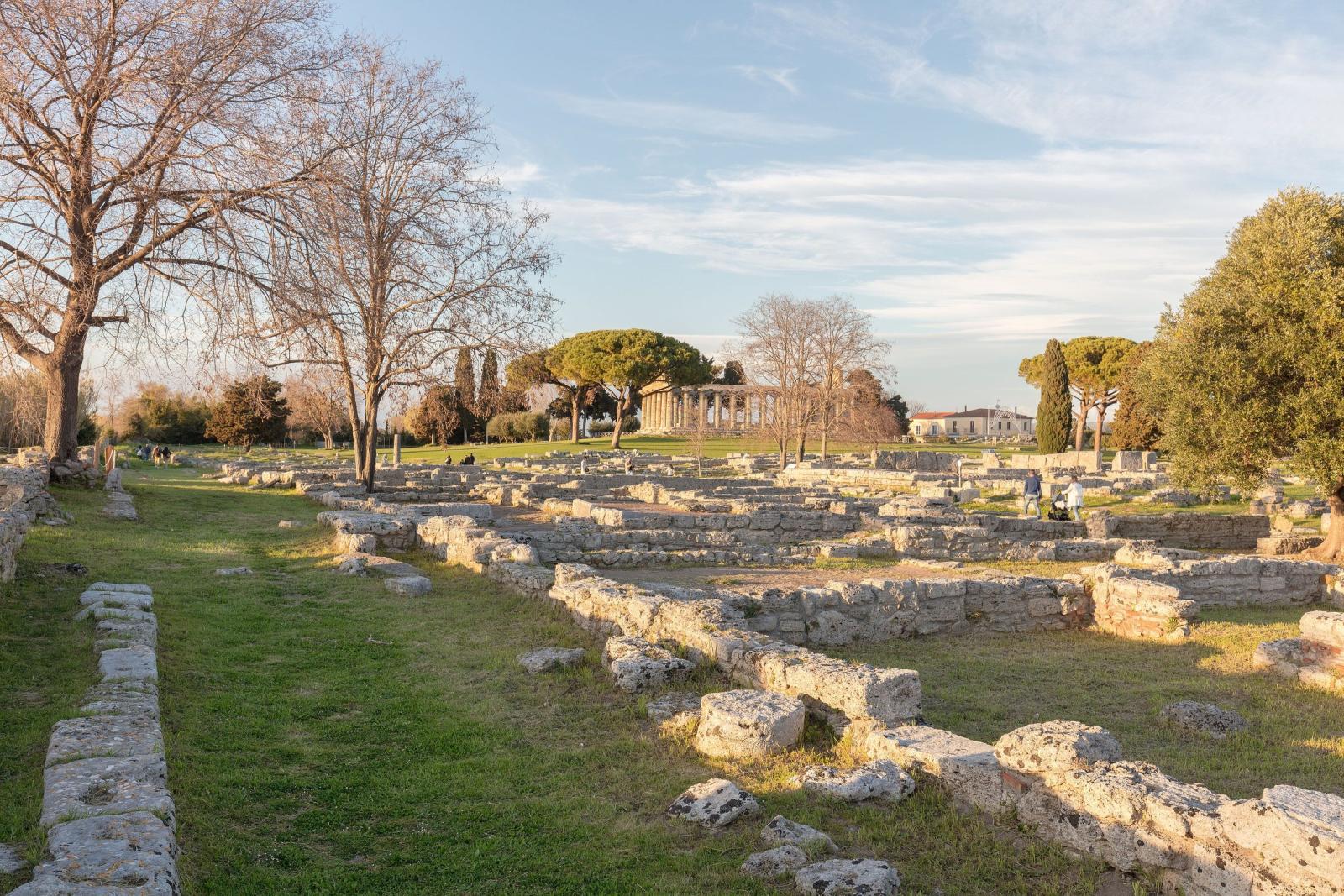
For archaeological sites, the low season is the most pleasant time of year. In summer the Sele plain can be very hot and the temple area offers little shade in the middle of the day; from November to March daytime highs usually sit between 13 and 18 °C, comfortable enough for long walks. Winter light, low even at noon, warms the stone of the columns for much of the day, not only at sunset.
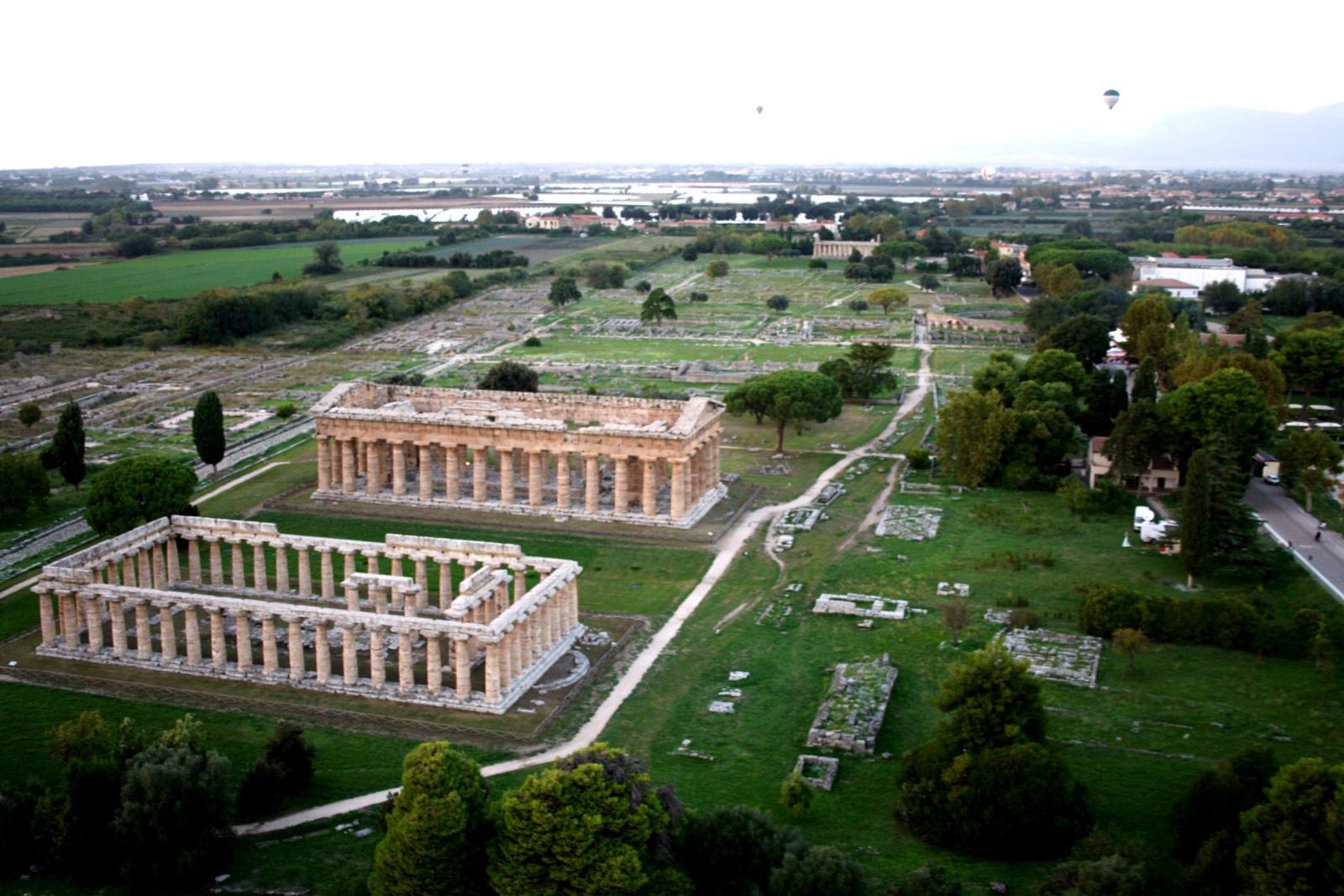
Then there is the quiet. Without the high-season groups you can linger in front of the Temple of Neptune and take in the nine-column façade of the "Basilica" and the Ionic porch of the Temple of Athena at your own pace. If this is your first visit, our complete guide to the Temples of Paestum explains how to tell them apart and what not to miss in the museum.
Finally, the price: from December to February the full ticket costs a third less, and admission is free on the first Sunday of the month. Note, though, that November is still charged at the full €15 rate.
How much is the ticket and what are the winter opening hours?
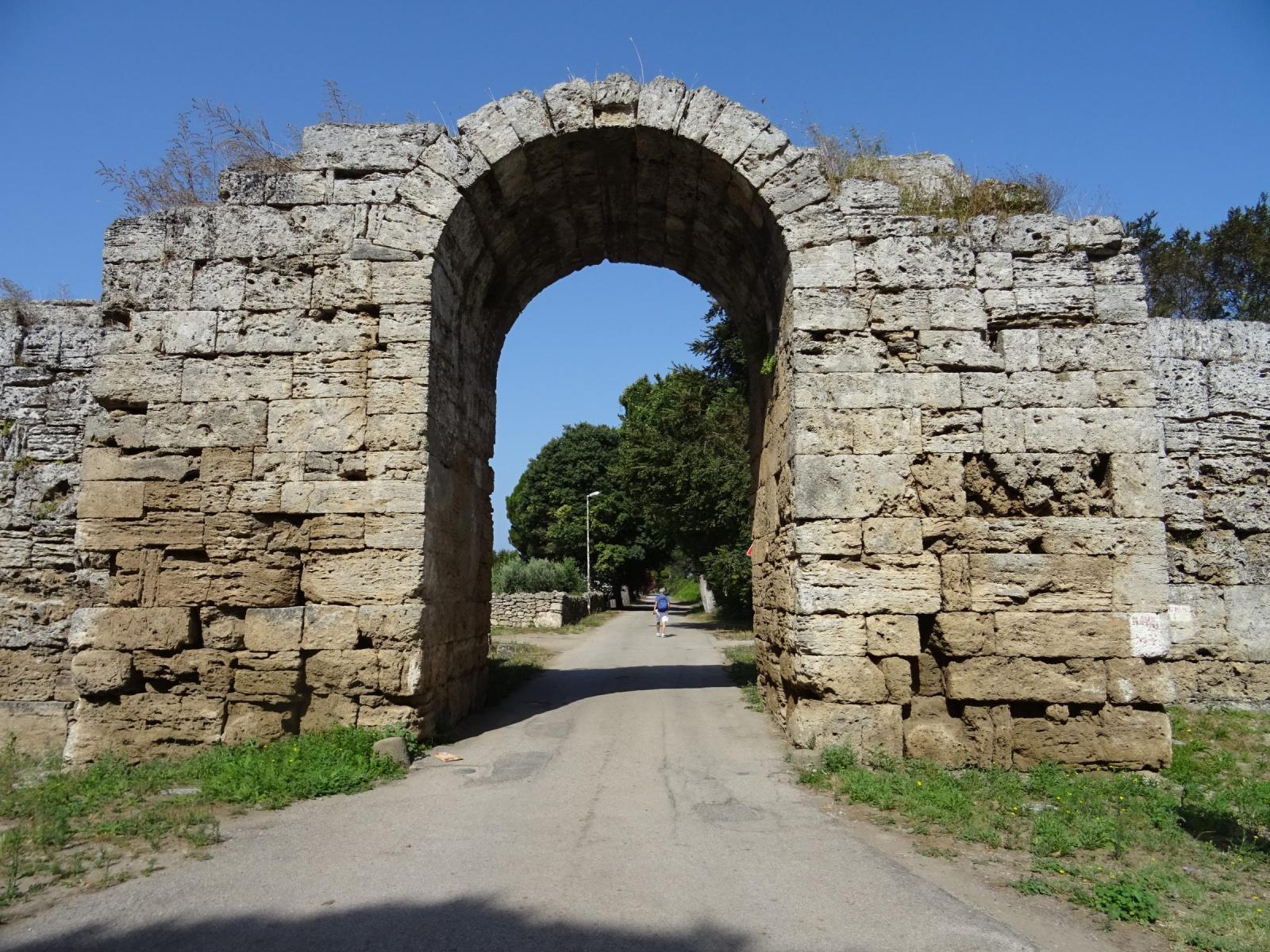
The Archaeological Parks of Paestum and Velia open every day from 8:30 to 19:30, with last entry at 18:30. From late September to late March (21 September to 28 March in the 2026-27 calendar), however, the temple area reached through Porta Cerere and the acropolis at Velia close earlier, following the daylight. Only the southern sanctuary at Paestum and the lower town at Velia stay open until 19:30.
| Single ticket | Valid 3 days: Paestum archaeological area, National Archaeological Museum and Velia |
|---|---|
| Full price | €10 December to February, €15 March to November |
| Reduced and free tickets | Reduced €2; free for 18- to 24-year-olds and under-18s (other reductions: see the official website) |
| Free admission | 2026 calendar: first Sunday of every month, 25 April, 2 June and 4 November. Check the current year's calendar on the official website |
| General hours | Daily 8:30-19:30, last entry 18:30 |
Source: Archaeological Parks of Paestum and Velia, ticket information. Hours and prices can change: please check before your visit.
| Period | Closes | Last full visit |
|---|---|---|
| 25 October - 13 November 2026 | 16:30 | 15:30 |
| 14 November 2026 - 1 January 2027 | 16:00 | 15:00 |
| 2 - 22 January 2027 | 16:30 | 15:30 |
| 23 January - 12 February 2027 | 17:00 | 16:00 |
| 13 February - 12 March 2027 | 17:30 | 16:30 |
| 13 - 28 March 2027 | 18:30 | 17:00 |
The southern sanctuary at Paestum and the lower town at Velia stay open until 19:30. The reduced-hours calendar is renewed every year: for the dates in force, see the official park website.
In practice, during the shortest weeks of the year it is best to enter the temple area by 15:00 and keep the museum, which follows the general opening hours, for later in the afternoon.
What is the weather like in Paestum from October to March?
The climate is Mediterranean: mild winters, with rain falling mainly between November and February and clear days alternating with short spells of bad weather. Average highs on the plain stay around 13-14 °C even in January, while night-time lows in the countryside can drop close to 4-5 °C. The sea is still around 22 °C in October and falls to about 14 °C in February.
| Month | Average high | Average low | Rainy days | Sea |
|---|---|---|---|---|
| October | 22.2 °C | 10.9 °C | 8 | 22 °C |
| November | 17.8 °C | 7.7 °C | 11 | 19 °C |
| December | 14.3 °C | 5.1 °C | 11 | 16.5 °C |
| January | 13.0 °C | 4.1 °C | 10 | 15 °C |
| February | 13.5 °C | 4.4 °C | 10 | 14 °C |
| March | 15.6 °C | 5.5 °C | 10 | 14.5 °C |
Temperatures: Salerno Pontecagnano weather station, 1951-1980 averages (Wikipedia). Rainy days and sea temperature: Salerno, 2005-2020 (Climates to Travel). These are averages: actual weather can vary a great deal from year to year.
What is there to do in Paestum and Cilento in the low season?
Temples and museum, at an easy pace
With a ticket valid for three days you can split the visit: the archaeological area in the morning, when the light is crisp, and the National Archaeological Museum on short afternoons, when it gets dark early outside. Inside you will find the Tomb of the Diver and the metopes from the sanctuary of Hera at the mouth of the Sele, a good plan for a rainy day too.
Velia, on the same ticket
Velia lies about 45 kilometres from Paestum and is included in the ticket. In winter its acropolis closes at the same times as Porta Cerere: set off in the morning to walk up towards the Porta Rosa and the medieval tower in the best light, and leave the lower town until last. History and tips in our guide to Velia.
The olive harvest and new oil
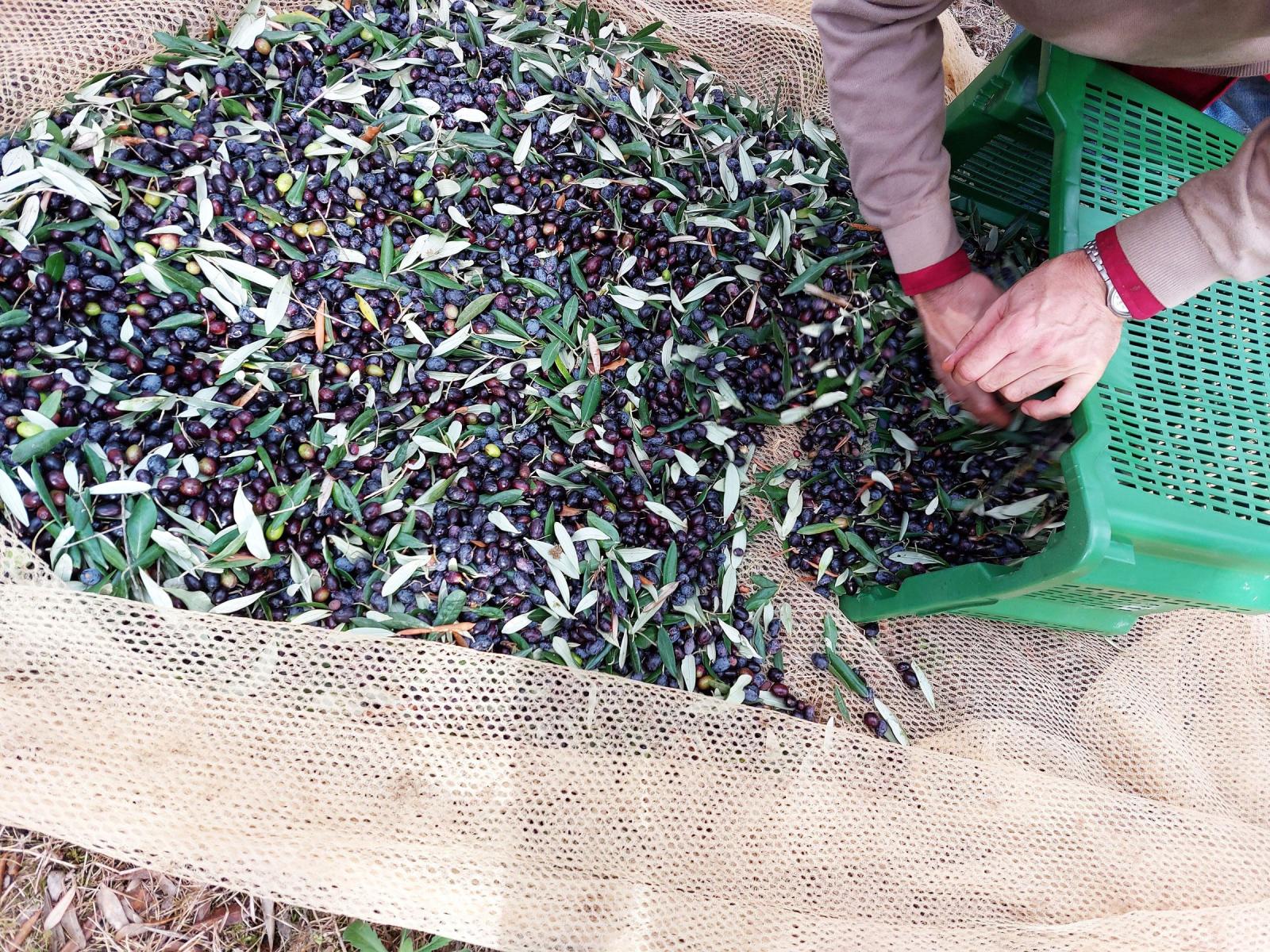
Between October and December the olives are picked across Cilento and the mills work at full speed: this is the moment to taste the new oil, green and peppery, ideally on a slice of warm bread. Several estates welcome visitors by appointment. Our guide to Cilento olive oil, wines and flavours covers the local varieties and a few producers to contact.
Buffalo mozzarella, all year round
Mozzarella di Bufala Campana DOP is made twelve months a year, and in winter you can enjoy it without the summer rush. Visit a dairy in the morning, while production is under way: our guide to the dairies near Paestum will help you choose.
Coastal walks
Clear winter days are perfect for the coastal paths, which in summer suffer from heat and little shade: the Trentova-Tresino trail at Agropoli and the walk to Punta Licosa from San Marco di Castellabate. Trail facts and times are in our guide to hiking in Cilento. After heavy rain, avoid riverside routes such as the Calore gorges.
The Certosa di Padula
One of the largest charterhouses in Italy, about an hour and a quarter from Paestum: in winter you can wander its cloisters almost alone. According to the Ministry of Culture's listing it opens from 9:00 to 19:30 (last entry 19:00), is closed on Tuesdays, and a full ticket costs €14. Check the official page before you set off.
The Mediterranean Archaeological Tourism Exchange
Every year in autumn Paestum hosts the BMTA, the Mediterranean Archaeological Tourism Exchange, with talks, exhibitions and the ArcheoVirtual showcase (the 2026 edition ran from 29 October to 1 November): if you are thinking about autumn 2027, follow the official website for the new dates.
What is closed or limited in winter?
- Castelcivita caves: closed from November to February, reopening in March with shorter hours (ISPRA). Everything about the caves is in our guide to the Cilento caves.
- Pertosa-Auletta caves: reduced hours in the low season; check the calendar of the Fondazione MIdA.
- Porta Cerere area and Velia acropolis: early closing, as shown in the table above.
- Beaches and lidos: most beach clubs and many seasonal places along the coast are closed; the beaches remain lovely for a walk.
- Sea connections: tourist boat services along the coast are seasonal.
- Il Giardino dei Pini: closed during the winter months, reopening in summer 2027.
How to plan an off-season visit?
- Start early: in December the sun sets shortly before 17:00 and the temple area closes at 16:00 (2026-27 calendar).
- Outdoors first, museum later: use the morning light outside and save the galleries for the afternoon.
- Dress in layers: bring a waterproof jacket and closed shoes; between November and February it rains on average ten or eleven days a month.
- Check opening hours: in the low season they change often, sometimes from one month to the next.
- Travel by car: it lets you combine sites that are far apart; our guide on how to get to Paestum covers all the options.
- Pick your day: free Sundays draw more visitors; if you are after peace and quiet, choose a weekday.
On short days, keep the plan light: temples in the morning, an unhurried lunch, the museum in the afternoon and Velia the next day on the same ticket. Keep an eye on the forecast and swap the days around if rain is due: the museum galleries are the ideal place for a grey afternoon.
When should you plan your next stay?
If you are thinking of coming back with the warm sun, or of combining temples and sea in one holiday, now is the time to look ahead to next season: Il Giardino dei Pini will reopen in summer 2027. You can already explore our rooms in the garden and check the booking page for available dates. To plan your days, our guide to Paestum in 1, 2 or 3 days offers ready-made itineraries.
Frequently asked questions
How much does it cost to visit Paestum in winter?
From December to February the full ticket costs €10; from March to November it is €15. It is valid for three days and covers the archaeological area, the National Archaeological Museum and Velia. Admission is free on the first Sunday of every month and on 25 April, 2 June and 4 November (2026 calendar).
What time do the temples of Paestum close in winter?
In the 2026-27 winter, from 14 November to 1 January, the Porta Cerere area closes at 16:00, with the last full visit at 15:00; from January the closing time moves gradually later, reaching 18:30 at the end of March. The southern sanctuary remains open until 19:30. The calendar is renewed every year: check the official website.
What is closed in Cilento in winter?
The Castelcivita caves are closed from November to February, most lidos and several seasonal places on the coast are shut, and tourist boat services are suspended. The Pertosa-Auletta caves run reduced hours: check the Fondazione MIdA website.
Is Il Giardino dei Pini open in winter?
No. The B&B is closed during the winter months and will reopen in summer 2027. Dates for next season will be available on the booking page of our website.