Cilento has two great show caves: Pertosa-Auletta, the only caves in Italy where you travel along an underground river by boat, and Castelcivita, a karst system about 4.8 kilometres long that is open from March to October. From our B&B they are about an hour and about 45 minutes away by car. Booking is advisable at Pertosa and compulsory at Castelcivita.
Beneath the Alburni mountains, water has been working the limestone for millions of years, opening galleries, halls and shafts. The two caves open to visitors tell that story in very different ways: at Pertosa you enter on the water, at Castelcivita you walk a long way among formations and vast chambers. Here is how to choose between them and plan the day.
Why are Cilento's caves so special?
Cilento, Vallo di Diano and Alburni National Park is also a UNESCO Geopark, and much of its geological heritage lies underground. The limestone massif of the Alburni is threaded with karst channels: slightly acidic rainwater slowly dissolves the rock and reshapes it into stalactites, stalagmites, columns and curtains. Pertosa-Auletta and Castelcivita are the two systems equipped for visitors, and both matter to archaeologists as much as to geologists.
How do you visit the Pertosa-Auletta Caves?
By boat on the River Negro
The Pertosa-Auletta Caves, also known as the Grotte dell'Angelo after an ancient cult of St Michael the Archangel, open between the villages of Pertosa and Auletta, at the gateway to the Vallo di Diano. An underground river, the Negro, runs through them, and the visit begins on the water: you board a boat without an engine, guided by the staff along a cable, and glide into the dark heart of the mountain. It is the only show cave in Italy where the first stretch is made by boat.
Beyond the inner landing stage the route continues on foot through halls and galleries rich in formations. The sound of running water follows you for much of the way, and the lighting is designed to bring out the shapes of the rock without flattening them.
Which routes can you choose?
The most popular route, Grotte Plus, takes about an hour and includes the boat trip and roughly a kilometre on foot. There is also a Premium route and a speleological itinerary of about three hours for those who want to go beyond the tourist path. Departures are at fixed times and boat places are limited, so book ahead, especially at weekends and in summer.
A Bronze Age pile-dwelling village
Pertosa is also an archaeological site. At the end of the nineteenth century the remains of a Bronze Age pile-dwelling village (second millennium BC), built over the water inside the cave, were identified here. Research has resumed in recent years: the excavation campaign of November 2025 uncovered further wooden structures from the Final Bronze Age, together with material from later periods.
The Fondazione MIdA museums
The caves are run by the Fondazione MIdA, which also manages two museums in Pertosa: the Speleo-Archaeological Museum, with finds from the caves, and the Soil Museum, an interactive exhibition about the ground beneath our feet that older children particularly enjoy. Routes, combined tickets and current opening times are on the Fondazione MIdA website.
What is there to see in the Castelcivita Caves?
A karst system almost five kilometres long
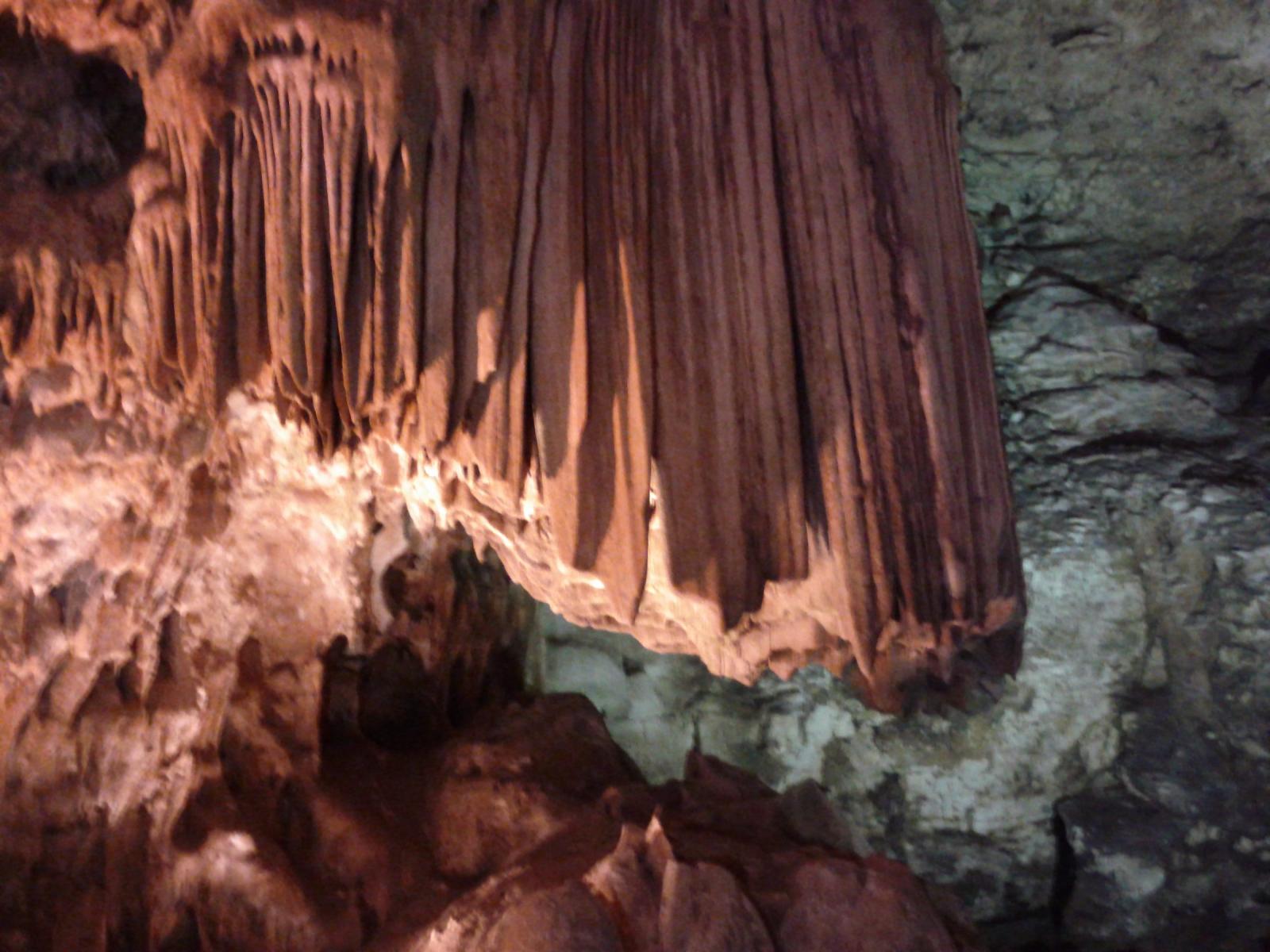
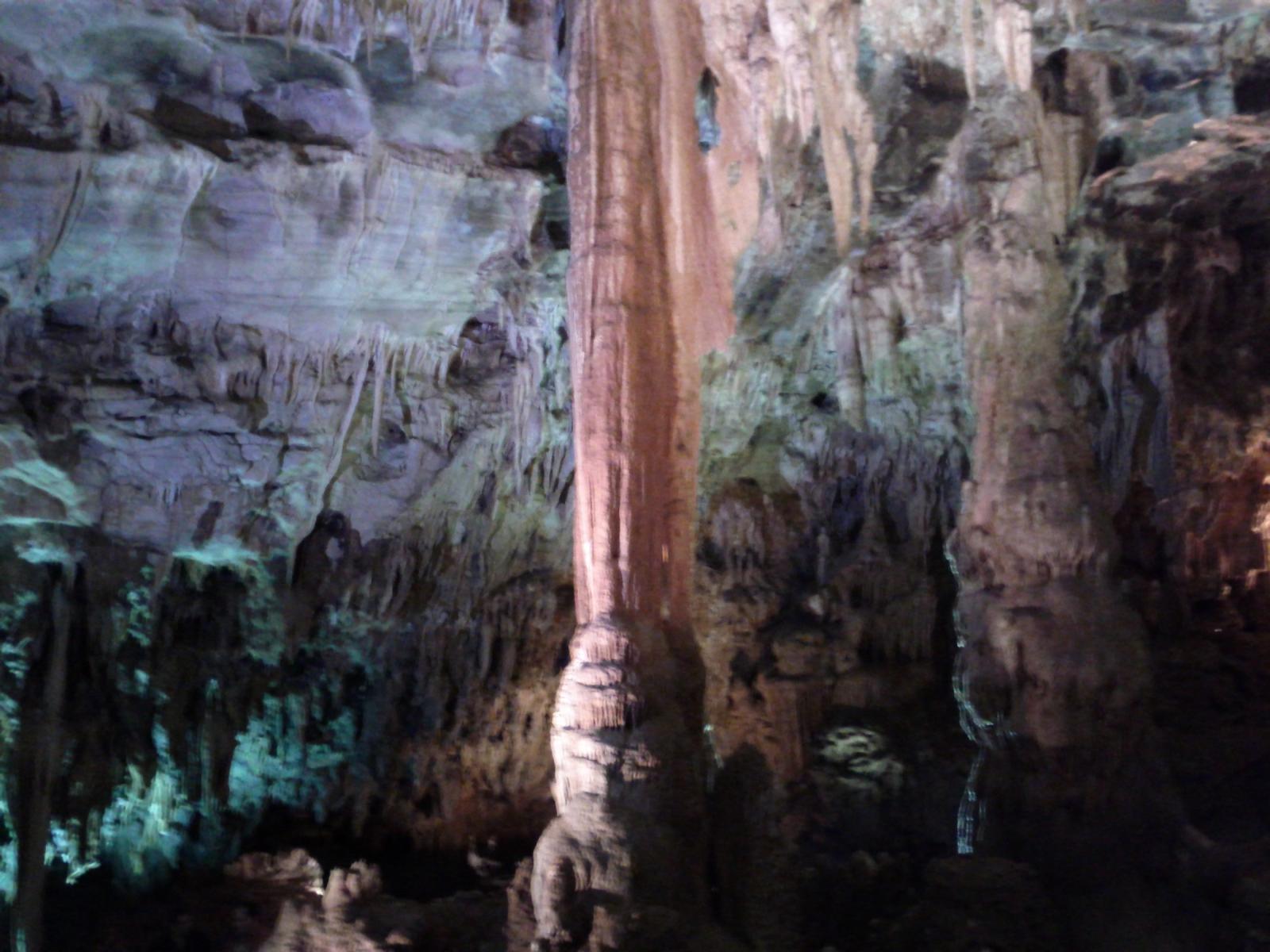
The Castelcivita Caves open at the foot of the Alburni mountains, just outside the village that gives them their name. The system extends for about 4,800 metres and is among the longest in southern Italy; the guided tour covers about 1.2 kilometres, alternating vast chambers, narrower passages and formations of every shape: needle-thin stalactites, columns where stalactites and stalagmites have met, and veils of calcite that look like fabric.
More than 30,000 years of history
Excavations at the cave entrance between 1972 and 1977 documented human presence in the Upper Palaeolithic, with layers dated to between about 42,000 and 33,000 years ago: groups of hunter-gatherers used the entrance as a shelter.
The modern story is more recent and begins with a tragedy. In 1889 two boys from Controne climbed down into the cave with oil lamps and a few matches; only one came out alive. Decades passed before anyone explored further, and the first official exploration dates from 1927. In 1932 a visit by Umberto of Savoy, Prince of Piedmont, earned the caves the name Grotte Principe di Piemonte; local tradition also calls them the Caves of Spartacus.
When are they open?
Castelcivita is a seasonal cave. From April to September tours run from 10:30 to 18:00, while in March and October the hours are shorter; from November to February the cave is closed. Entry is by guided tour only and booking by phone is compulsory.
| Pertosa-Auletta: opening | Hours vary with the season; some calendars show a Monday closure |
|---|---|
| Pertosa-Auletta: visit | Grotte Plus route of about 1 hour (boat and about 1 km on foot), fixed departure times; Premium and speleological routes also available |
| Pertosa-Auletta: booking | Advisable; tickets and times on the Fondazione MIdA website |
| Castelcivita: opening | April-September 10:30-18:00; March and October reduced hours; closed November to February |
| Castelcivita: visit | Guided tours only, route of about 1.2 km |
| Castelcivita: booking | Compulsory, telephone +39 0828 772397 |
| By car from the B&B | Castelcivita about 45 minutes; Pertosa-Auletta about 1 hour (A2 motorway) |
Sources: Fondazione MIdA and ISPRA page on the Castelcivita Caves. Hours and prices may change: please check before your visit.
Pertosa or Castelcivita: which should you choose?
Guests often ask us which of the two to see. If you have time, both: they complement each other.
- Pertosa-Auletta is the one for the thrill of arriving by boat and a shorter route, with the Fondazione MIdA museums to round off the visit. It also has a longer season.
- Castelcivita suits lovers of geology: the walk is longer and the variety of formations greater. It is also the closer of the two to Paestum.
- With children both work well, but Pertosa usually wins over younger visitors thanks to the boat and the Soil Museum.
- From November to February Pertosa-Auletta is the only option, once you have checked its winter hours.
Can you visit both caves in one day?
Yes, from April to October, when both are open. The drive between Pertosa and Castelcivita takes about 40-50 minutes. A typical day:
- Around 8:30 leave the B&B for Pertosa, about an hour via the A2.
- Morning: visit the Pertosa-Auletta Caves on one of the first departures, then the Soil Museum if you have time.
- Lunch in the surrounding area.
- Early afternoon: drive to Castelcivita (about 40-50 minutes) for a guided tour booked in advance.
- Late afternoon: back at the B&B in about 45 minutes, in time for a swim in the pool (in season).
In March and October, when Castelcivita closes earlier, reverse the order: Castelcivita in the morning and Pertosa in the afternoon, after checking departure times.
It is cool and very humid inside the caves in every season, so even in August keep a jumper in the car and wear closed shoes with a non-slip sole. For the boat at Pertosa, leave rucksacks and bulky bags in the car. And ring before you set off: at Castelcivita there is no entry without a booking.
How do you get to the caves from Il Giardino dei Pini?
Il Giardino dei Pini is in Capaccio Scalo, north of the Paestum archaeological area, a convenient base for heading inland. Castelcivita is about 45 minutes away as the road climbs towards the Alburni; for Pertosa it is best to take the A2 motorway and allow about an hour. If you are planning a few days between the coast and the hills, take a look at our garden rooms.
The caves combine well with other inland outings: the trails of Monte Cervati and the Calore gorges, described in our guide to hiking in Cilento, or the Certosa di Padula, a little further south along the A2, covered in our guide to Cilento National Park. On rainy days, when the trails are best avoided, the nearest alternative is the museum and the Temples of Paestum, about 10 minutes by car. For general information on the park, see the National Park website.
Frequently asked questions
Are the Castelcivita Caves open in winter?
No. Castelcivita is open from March to October, with shorter hours in March and October, and closed from November to February. During those months you can visit the Pertosa-Auletta Caves instead, after checking the winter timetable on the Fondazione MIdA website.
How long does a visit to the Pertosa-Auletta Caves take?
The most popular route, Grotte Plus, takes about an hour and includes the boat trip on the River Negro and roughly a kilometre on foot. If you want to go further, the speleological itinerary lasts about three hours.
Are the Cilento caves suitable for children?
Yes, both offer guided tours suitable for families. Pertosa tends to delight children most, thanks to the boat and the Soil Museum. Bring closed shoes and a jumper, as the paths are damp and slippery in places.
How far are the caves from Paestum?
From Il Giardino dei Pini B&B in Capaccio Paestum, the Castelcivita Caves are about 45 minutes by car and the Pertosa-Auletta Caves about an hour via the A2 motorway. The two caves are about 40-50 minutes apart.